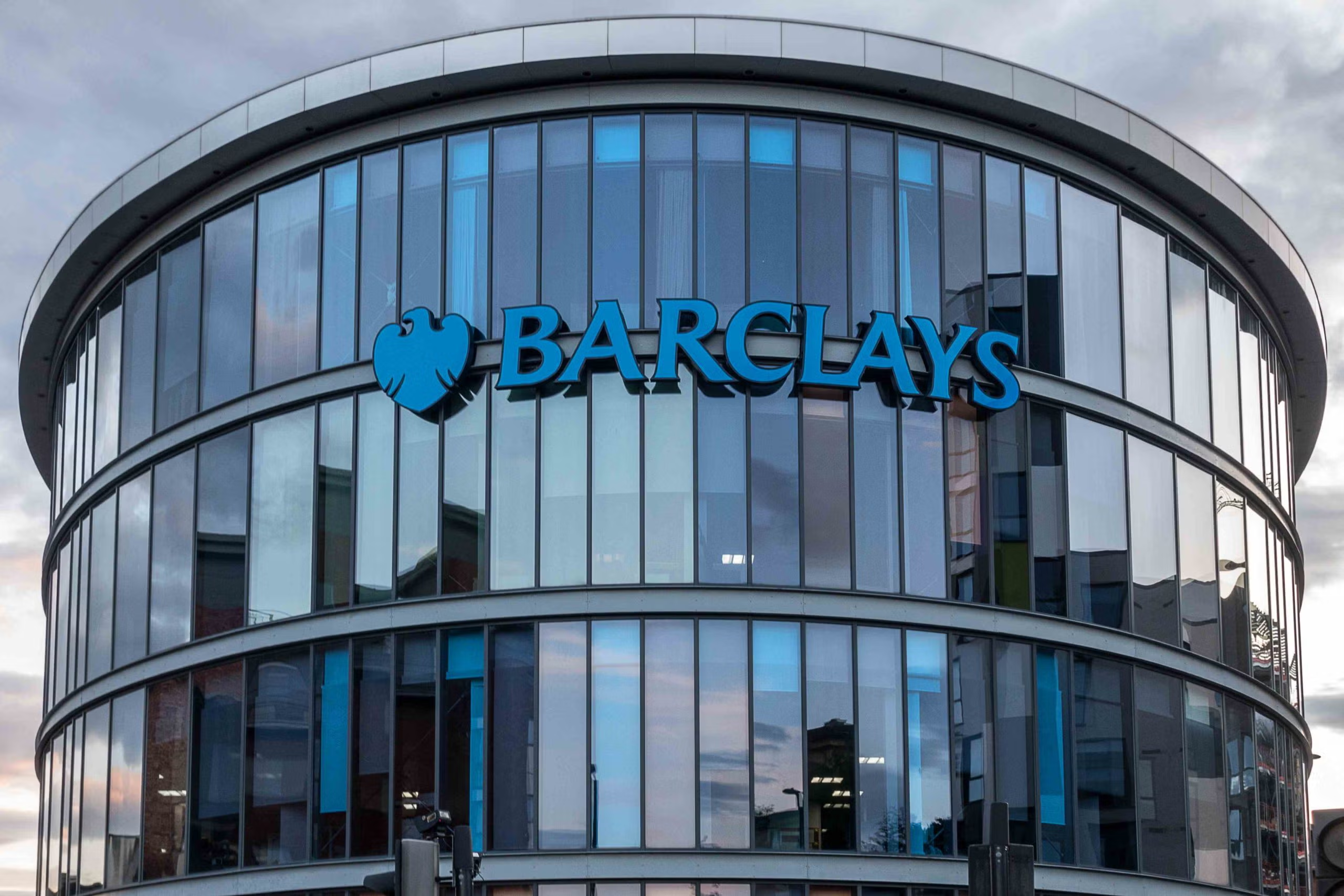
- Barclays has made its first investment in a stablecoin-focused company, Ubyx.
- The move highlights growing bank interest in regulated tokenized money.
- Stablecoins are increasingly viewed as payment infrastructure, not speculation.
Barclays has taken a notable step into the stablecoin economy, marking a shift in how major banks are positioning themselves for a tokenized future. The UK-based banking giant has made its first-ever investment in a stablecoin-related company, backing Ubyx, a US-based clearing platform focused on regulated digital money.
While the size of the investment remains undisclosed, the move is symbolically significant. Barclays has historically taken a cautious stance toward crypto, often emphasizing risks and limiting customer exposure. This investment suggests that the conversation inside large banks is changing — from whether stablecoins matter to how institutions can integrate them safely.
Why Barclays Is Backing Ubyx
Ubyx aims to solve a growing problem in digital finance: interoperability. As more regulated entities issue stablecoins and tokenized deposits, banks and fintech firms need infrastructure that allows them to move seamlessly between traditional accounts and onchain money.
Founded in early 2025 by payments veteran Tony McLaughlin, Ubyx positions itself as a neutral clearing layer connecting regulated issuers with financial institutions. Its platform is designed to support stablecoins issued by players such as Ripple and Paxos, as well as tokenized bank deposits.

For Barclays, the appeal is practical rather than speculative. The bank has framed the investment as a way to explore new forms of digital money while maintaining regulatory discipline — a tone that reflects how traditional finance is approaching stablecoins more broadly.
From Caution to Selective Participation
The investment stands in contrast to Barclays’ earlier posture. As recently as mid-2025, the bank restricted crypto purchases on its credit cards, citing volatility and consumer risk. Yet stablecoins, especially those backed 1:1 by fiat and issued under regulatory oversight, occupy a different category.
Rather than enabling retail speculation, stablecoins are increasingly viewed as payment rails — tools to improve settlement speed, liquidity management, and cross-border transfers. Barclays’ move suggests it now sees stablecoin infrastructure as unavoidable rather than optional.
A Global Trend, From London to the UAE
Barclays is not alone. In the UAE, RAKBank has received in-principle approval to issue a dirham-backed stablecoin, adding momentum to a region already positioning itself as a hub for regulated digital assets.
Unlike earlier crypto cycles dominated by startups, today’s stablecoin push includes telecom firms, global banks, and central bank-supervised institutions. The common thread is regulation-first design, with audited reserves, segregated accounts, and clear oversight.
Despite growing institutional interest, key questions remain. Interoperability between blockchains, alignment across regulatory jurisdictions, and real-world adoption will determine whether stablecoins move beyond pilot programs into everyday finance.
Barclays’ investment does not signal a wholesale embrace of crypto. But it does confirm that stablecoins — once viewed as a fringe experiment — are now firmly on the radar of the world’s largest banks.
Disclaimer: The information in this article is for general purposes only and does not constitute financial advice. The author’s views are personal and may not reflect the views of CoinBrief.io. Before making any investment decisions, you should always conduct your own research. CoinBrief.io is not responsible for any financial losses.