- Seized Samourai Wallet Bitcoin was not sold despite on-chain speculation.
- Assets are now held in the U.S. Strategic Bitcoin Reserve.
- Policy marks a shift away from auctioning confiscated crypto.
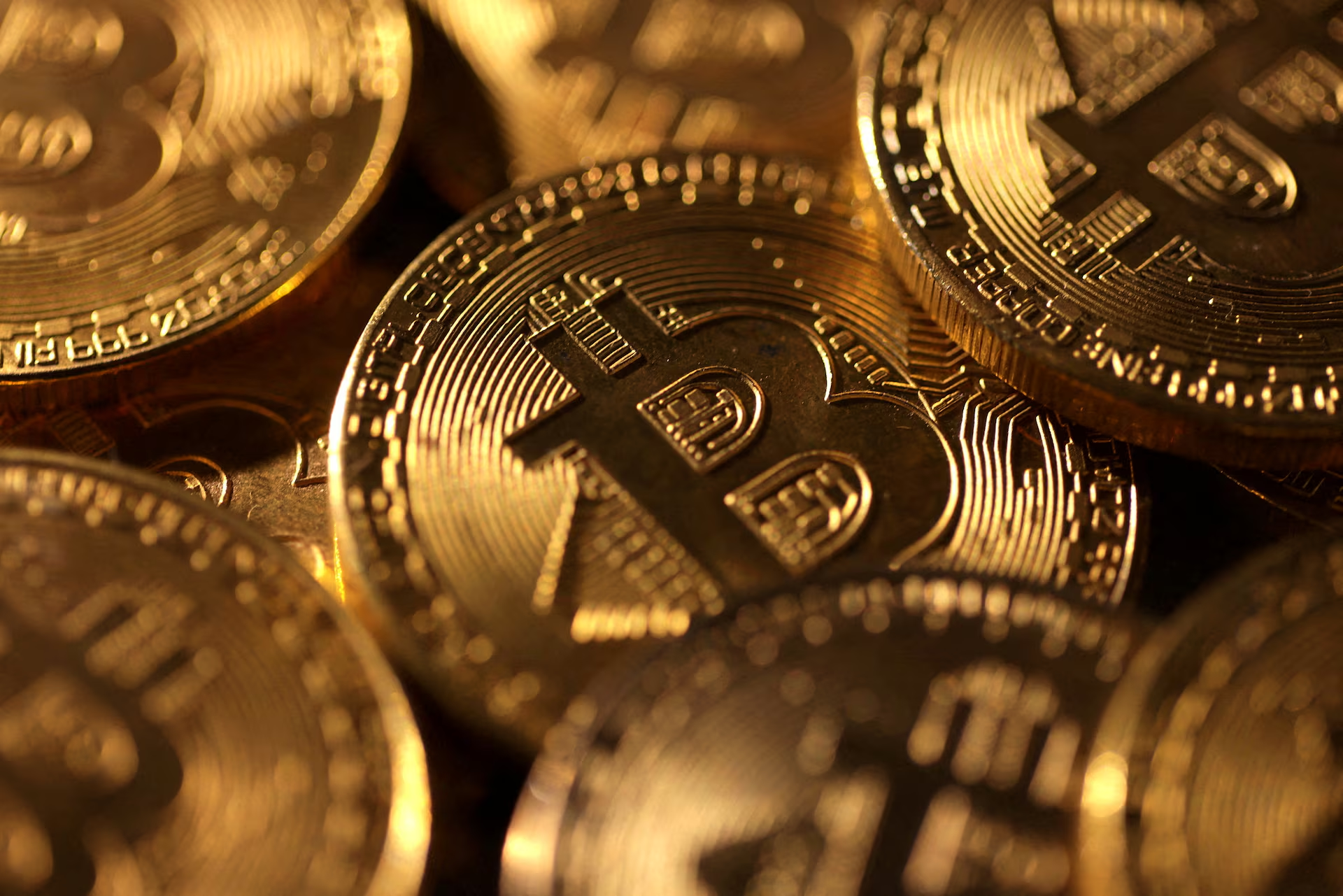
The U.S. Department of Justice has moved to quiet speculation surrounding Bitcoin seized in the Samourai Wallet case, confirming that the assets were not sold and remain under federal control. The clarification follows online claims that the government may have liquidated the funds after a recent on-chain transfer raised eyebrows across the crypto community.
Instead, officials say the Bitcoin is now held as part of the U.S. Strategic Bitcoin Reserve—a relatively new framework that signals a shift in how Washington handles confiscated digital assets.
DOJ Addresses Coinbase Prime Transfer Speculation
Confusion erupted after roughly $6.3 million worth of Bitcoin tied to the Samourai Wallet case was transferred to a Coinbase Prime address. On social media, some observers interpreted the move as a possible sale.
According to the DOJ, that assumption was incorrect. The agency says no liquidation occurred and that the transfer was administrative in nature, consistent with internal asset management procedures. The Bitcoin remains under government custody.
Patrick Witt, Executive Director of the White House President’s Council of Advisors for Digital Assets, publicly relayed the DOJ’s position, emphasizing that the assets were neither sold nor earmarked for sale.
Strategic Bitcoin Reserve Marks Policy Shift
The seized Bitcoin now sits inside the U.S. Strategic Bitcoin Reserve, a Treasury-managed structure established under Executive Order 14233, signed in March 2025. The order directs federal agencies to retain forfeited Bitcoin instead of auctioning it off—a clear departure from earlier practices.
For years, U.S. authorities routinely sold confiscated crypto, sometimes years later, often to the frustration of market participants tracking those wallets. Under the new policy, seized Bitcoin is treated as a long-term government-held asset rather than disposable property.
While officials have not disclosed how much Bitcoin the federal government currently holds, Witt confirmed that the Samourai Wallet funds will remain on the government’s balance sheet.
Inside the Samourai Wallet Case
The Bitcoin was forfeited by Samourai Wallet co-founders Keonne Rodriguez and William Lonergan Hill after both pleaded guilty to conspiracy charges tied to operating an unlicensed money-transmitting business.
Prosecutors argued that the mixing service facilitated hundreds of millions of dollars in transactions linked to fraud, cybercrime, and darknet activity. As part of their plea agreements, the founders agreed to forfeit approximately 57 Bitcoin.
In November 2025, Rodriguez received a five-year prison sentence, while Hill was sentenced to four years after admitting his role in helping obscure more than $237 million in illicit funds.
The case resurfaced in public debate in December, when President Donald Trump said he would review a possible pardon for Rodriguez. His comments reignited discussion within the crypto industry over how privacy-focused software developers should be treated under U.S. law.
Also Read: Bitcoin Crashes $3,500 as Trade War Fears Explode — Is More Pain Ahead?
The decision to retain seized Bitcoin rather than sell it could reduce sudden government-driven supply shocks. At the same time, it underscores Washington’s evolving stance toward Bitcoin as a strategic asset rather than a liability to be quickly monetized.
As enforcement actions continue, the Strategic Bitcoin Reserve may play a growing role in shaping how the market interprets government-held crypto.
Disclaimer: The information in this article is for general purposes only and does not constitute financial advice. The author’s views are personal and may not reflect the views of CoinBrief.io. Before making any investment decisions, you should always conduct your own research. CoinBrief.io is not responsible for any financial losses.